Update: Choosing stream friendly dishwashing detergents
One of our main Goals
Overall, our waterways visually appear to be in great shape but there is
some
|
|
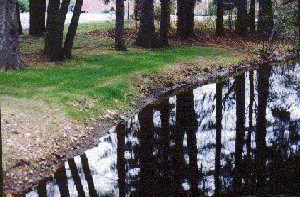
Buffer/Yard Waste/Runoff concerns: No buffer, grass up to edge of stream, erosion, NBWL2. When fertilizers, pesticides, and herbicides are applied to a lawn that runs to the streams' edge, these materials also end up in the stream.
| |
evidence of "nonpoint source pollution." This type of pollution -- where
you can't point at a direct source like a factory -- results from
stormwater runoff, soil erosion, and septic system leakage. Litter, lawn
chemicals, pet waste, and car oil can all contribute to water
contamination.
The Stream Teams and other community volunteers recently cleaned up litter
along sections of Butter Brook, Coles Brook, Conant Brook, and Fort Pond
Brook. You can help, too, by:
- Limiting fertilizer use -- When fertilizing your lawn this fall,
remember more is not better. If you apply more fertilizer than the grass
or other plants can take up, rain can wash the excess into the nearest body
of water. Nutrients in the fertilizers can cause an increase in algae and
other aquatic plant growth. This excess growth leads to oxygen depletion,
causing fish and other creatures to die. To help preserve the natural
water balance, follow directions on the fertilizer package. Or, better
yet, have your soil tested to determine the optimum fertilizer application
rate for your yard.
- Choosing low phosphate or phosphate free detergents -- Phosphates act
as a fertilizer. Choosing low phosphate or phosphate free detergents helps
minimize the overgrowth of plants in the water.
Click here for information about phosphate levels in several popular
automatic dishwashing detergents.
- Removing dead leaves -- Don't pile autumn leaves by stream banks or
|
|
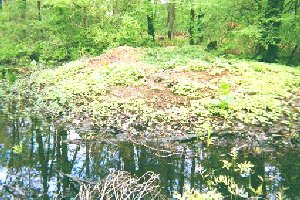
Buffer/Yard Waste/Runoff concerns: Grass clippings on bank of Fort Pond Brook, FP7. Grass clippings, brush, and leaves piled along the streams' edge, or near storm storm drains, "fertilize" the water.
| |
allow them to accumulate by street storm drains. Leaves can clog
waterways, add nutrients to the water, and decrease water clarity. To get
rid of leaves, first mow them right on your lawn to reduce the volume.
Then collect the leaf residue, and use it as mulch around shrubs or flower
beds, or turn it into compost to enrich your soil. You can compost at home
or bring your leaves to the town's transfer station to be composted.
|